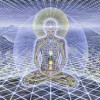
The Real Meaning Of Living Theosophy: Here & Now:

2010 January 30
by admin

newtheosophynetworkbannerCityskyline_005_copy

A New Beginning: Theosophy Here & Now

Sevenfold Spiritual Nature Of The Human Being: Part One:

Sevenfold Spiritual Nature Of The Human Being: Part Two:

Meditation Practice: The First Form:

Wisdom Path Meditation: Ancient Roots

Meditation Diagram: H.P.B. Teaches Total Spiritual Liberation:

Read the important vision statement article by Star: Applied Theosophy

The Betrayal Of The First Object:

2010 January 30
by KMT

Here we are in 2010, one hundred and thirty-five years since the founding of the Theosophical Society in New York in 1875.

We started out with three objects:

[1] To form a nucleus of the Universal Brotherhood of Humanity, without distinction of race, creed, sex, caste/status or colour.

[2] To encourage the study of Comparative Religion, Philosophy and Science.

[3] To investigate unexplained laws of Nature and the powers latent in man.

This first Object: [1] To form a nucleus of the Universal Brotherhood of Humanity, without distinction of race, creed, sex, caste/status or colour: Has become enshrined in the Canadian Charter of Rights and Freedoms and the UN Charter and is fundamental to the EU Charter. These freedom provisions once thought to be the very bleeding edge of idealist radicalism are now considered commonplace and taken for granted in all advanced societies. But what are these freedom provisions really for?

Apart from its humanitarian utility as a means to create a political context for a peaceful and prosperous society these freedom provisions encourage a thoughtless and shallow way of life dedicated to the pursuit of personal desires. Yet in Theosophical terms the First Object is about much more than  this. The vast majority of societies where this first object is now taken for granted ;also embrace Capitalist Consumerism couched in Ideological Left Liberalism.

In Theosophical terms the level of consciousness that is being spoken to in the First Object is the Fourth level in the Sevenfold spiritual nature of the human being:

[4] [Personal-self: Lower Mind] “I Think Therefore I Am” Desire Mind: Mental Conditioning and Reactivity: Beliefs: Educational Skills: Self in “the world”. Public Image: Alienation: Loneliness:

The spiritual purpose of the First Object was to release the human being from the thralldom and polarized subjectivity of the Fourth Principle in order to free the human being up in such a way as to make comprehension of the higher spiritual principles possible.

It is clear to see that the Fourth Principle is highly vulnerable to personal desires and can be easily seduced into thinking that the purpose of life is the fulfillment of these personal desires and that the purpose of society is to organize the production and availability of the objects of these desires: in short the ideal context for the enclosed and degenerated Fourth Principle is Capitalist Consumerism couched in Ideological Left Liberalism.

The goal of: “To form a nucleus of the Universal Brotherhood of Humanity” has been subverted by the multicultural notion that inter-ethnic tolerance is all that is needed to keep society running smoothly. A radical example of how badly this ‘tolerance’ approach can fail is the Multicultural socialist paradise of Yugoslavia after the fall of the Soviet Union.

Obviously the First Object cannot be attained by ordinary means. Where Yugoslavia failed along with all multicultural societies is that it is impossible to legislate improvements in the spiritual nature of human beings. If this were possible all we need do is pass a law that all people will now be better human beings and solve the worlds problems that way.

Lets keep this First Object before us as we proceed, it says:

[1] To form a nucleus of the Universal Brotherhood of Humanity, without distinction of race, creed, sex, caste/status or colour.

This First Object was not intended to be taken in isolation, and it cannot be if it is to be actually made real and fulfilled. “To form a nucleus” is intended to overcome the natural alienation that attends the early stages of individuation found in the Fourth Principle. The means to bring about the First Object is contained in Objects [2] and [3].

Certainly the First Object demands a response from a humanity who are serious about life: [2] To encourage the study of Comparative Religion, Philosophy and Science. A mindful humanity composed of individuals who are so serious about religion that they are engaged in the study and understanding of all religions.

Individuals who wish to think deeply and seriously about universal theology and philosophy in order to learn the meaning of life and what it means to think deeply and clearly about the central concerns of a spiritually emancipated humanity. This same humanity will concern itself with Science and the pursuit of what can be gained through Science, namely objective and provable knowledge of man and the universe.

This is a call to a spiritual science that can open the way towards a healing of the fractured world where science and religion must remain ever incompatible. Multiculturalism couched in Consumerism and deadening inter-ethnic secular ‘tolerance’ falls badly short of the First Object.

The First Object is not trying to bring a materialistic secular society into being quite the contrary it calls for a universal spiritual society grounded in a thoughtful philosophical mindset confirmed by scientific research. This is reemphasized in the Third Object: [3] To investigate unexplained laws of Nature and the powers latent in man]. These latent powers are spiritual abilities and talents as yet un-manifested potentials hidden within the spiritual depths of all truly human beings.

The means to bring about the First Object is Theosophy itself. We can see with the inclusion of natural overlap that:

The First Object: [1] To form a nucleus of the Universal Brotherhood of Humanity, without distinction of race, creed, sex, caste/status or colour.] Refers to Body and Soul.

The Second Object: [2] To encourage the study of Comparative Religion, Philosophy and Science.] Refers to Soul and Mind.

The Third Object:[3] To investigate unexplained laws of Nature and the powers latent in man.] Refers to Mind and Spirit.

Only through the practice of living Theosophy itself can the First Object be realized.

Through the Looking Glass

2009 December 6
by star

As I was waking up, I was dreaming. I was reading a book, many books, they were difficult to read, but full of wisdom, I loved them. I was the small girl, but I could read them and understand all the wisdom, the paradigms of consciousness, I understood it all. This knowledge seemed to be a “steadying force” that was being explained by many people, and there was a strong knowing that it was there, behind everything. In fact, it was there always, it was laid out in many ways, and even if I hadn’t read the books, the knowledge just was, as it is, underlying everything. It was already all there.

And then, as dreams go, I was the adult, who remembered that she had already read this, somewhere, sometime.

When I awoke I felt as if this whole lifetime, is already all there. For everyone – it is already there. Everyone is complete and the manifestation is complete.

Falling back into this line of thought in a waking meditative state, I again saw it. As I traced over what seemed to be “the pages”, with a small jeweler’s magnifying glass, I began to see the details. How wondrous, the green trees and the earth in such diversity; the people in this awareness space of the magnifying glass each had their own identifiable personalities and vibrations. I kept going over and over this small space, finding out more things, interacting with the people. And they are interacting with me. I was curious and intensely interested .

Somewhere in that small space of what I was perceiving as time, as the magnifying glass moved across, I become that time. I am that vision in the magnifying glass. I am no longer the watcher, guiding the glass over the manifestation to see what I could see. I have become entangled with the beings and I am working through this paradigm which is this place in time. There are lots of problems, one day leads to the next. I think I understand, I think I am helping or I think I am improving and getting ahead of this game. More and more and more, it never stops… I search for the Utopia, the way out – the greater meaning or the solution to problems.

During this experience in time, I have the nagging feeling that I have done all this before, or it is fate? But it can’t be fate because I am making choices. I am choosing good and bad, purifying myself, striving to understand and to become an enlightened spiritual being. It can’t be fate, because if it were all laid out wouldn’t that eliminate the choices?

But those choices… do they appear to be choices? Or are they just me, running my awareness, my “jeweler’s magnifying glass”, over the already complete manifestation, and the only choice I am making is which part of it I want to see?

Every experience I have there, in that moving space of awareness which has become time, has infinite possibilities; every being is infinite and complete and part of the whole manifestation.

I become the watcher looking through the glass again and I see it as a dream, but the flavor of it remains on my soul, the taste on my lips of something I have forgotten, some bit of understanding remains, I can’t remember how I know it, I try to trace my thoughts back and get lost ….

I wanted to share this with you, so that you would know that everything is okay, you are not lost; you are part of a whole that is already complete.

It’s not about the “things, the personality and the experiences” – we are awareness beings without these attributes. We are all Space and Time and our curiosity which pushes us to see or experience the manifestation is the movement.

Buddha’s Garage Sale Of Skandhas:

2009 December 1
by KMT

The more you learn about the Buddha the more you realise that he was-is the greatest Spiritual Genius who has ever lived, probably that’s why we are still talking about him over two thousand five hundred years later. Amongst the many brilliant things he realised and taught was the concept of the Skandha. In Pali and other languages at that time a Skandha referred to a bundle or heap or pile of disparate objects. Everybody knew what a skandha was.

He gave this innocent unassuming word, which everyone understood clearly, psychological and spiritual meaning by referring to the internal heap or pile of inner psycho-spiritual objects that beset human awareness. A Skandha is a lot more than just stuff.

A garage sale is a skandha; and what’s in the garage sale? Say it’s one of those huge garage sales that happen after living in the same house for thirty years raising four children and sending the last of them off to their own grownup lives only recently. When you walk through that garage sale you can see the chains and sequences of objects. There’s furniture, appliances and out of date electronic equipment. Old sports equipment and infomercial exercise machines. There are books, magazines, music collections, mapping out the decades. There’s kitchen equipment, cutlery, plates with mismatched bowls, pots and pans and weird grilling devices and perhaps a defunct but still working barbeque.

Boxes of old ornaments that have lost their sentimental grip on their owners are balanced precariously on the edge of an old chest of drawers. Someone’s attempt to become an artist is partly visible in that stack of almost good paintings. Old birthday and Christmas presents that were given to one and coveted by another now abandoned look rather lonely. All of these objects are connected to the memories of beloved family members, and the objects in one way or another are all connected to each other, almost as if an important part of your identity and the meaning of your life is tied up in all these old things.

It’s a nice sunny morning a good crowd of early bird garage sale mavens are in full plunder and bargain hunt mode. Today is Garage Sale Day and all these things must be gone by days end along with any feelings of attachment to them.

Now imagine that it is your garage sale and at the end of the day all the objects are gone but your attachment to them is not. It isn’t only the objects you miss but all of the associations and connections to the people and memories associated with the objects. You are having really serious sellers remorse. As time passes, even after you have moved to a new house, you are haunted by the memory of many of the things that disappeared from your life on the day of that garage sale. You often think about all the associations and people connected to those objects, and you really miss them and want them back.

Some of those memories are extremely upsetting, because they relate to things you have done that you are not proud of, and to things that others have done to you that for all you try you just can’t fully forgive or forget. There is psycho-energetic intensity to all these memories which increases the more you dwell on them. The rest of your life passes with these intensifying memories going on in the background of your otherwise normal old age.

You die in a normal way of old age. In your next lifetime you have a whole lot of weird attachments and reactions to emotional situations. You now have heavily charged Skandhas and they all relate in the main to the following five areas of your human experience:

[1] Form
[2] Perception
[3] Consciousness
[4] Action
[5] Knowledge

© permission granted to newtheosophynetwork.com one use alone.

The Level Of Spiritual Consciousness Called: “Too Smart For Your Own Good”.

2009 November 30
by KMT

As awareness awakens on ever deeper levels through the practice of Wisdom Path Meditation and “living the life” a very significant stage is reached where the individual must pay the closest attention to their motives and actions. Of course we must always temper our motives with wisdom and our actions with compassion, but in the normal run of life we may have ‘normally selfish’ motives and actions based upon enlightened self interest. As a general rule no great harm can come from a normal good person still sleeping in the four Principles of the lower self.

When through inner development and/or natural karmic unfoldment the inner states of the Fourth Principle and the more obvious and easy to apprehend awareness states of the Fifth Principle which is Mind [manas] itself have been reached, a dangerous crossroads of destiny has been entered.

[5] [Spirit-Self: Manas] “A mind to embrace the Universe” Pure Intelligence: Impersonal Thought: Intelligent Conscience: Objectivity: Pure Love of Accurate Knowledge: Individuality for Good or Ill: Solitude:

[4] [Personal-self: Lower Mind] “I Think Therefore I Am” Desire Mind: Mental Conditioning and Reactivity: Beliefs: Educational Skills: Self in “the world”. Public Image: Alienation: Loneliness:

Between each of the mental emotional and spiritual principles there is a passable “ring pass not”. Theosophy teaches that if you simply proceeded in this and all your future lifetimes as a good being you will discover yourself an immortal god at the end of the great cycle. Those who feel a deep longing to “Awaken Now” to a greater life are obliged to travel the path of self conscious spiritual development. This longing to awaken now must be permeated with a pure motive to serve humanity or it is merely spiritual ambition, and will have very bad results.

None of this is an issue until Spirit-Self begins to awaken within Personal-self. There is a profound Eureka moment followed by a complete revolution in consciousness. Everything that was previously held as truth is up for radical questioning. This is not the same thing as the widely advertised “conversion experience” where one set of largely misguided beliefs are exchanged for another.

When the pure love of accurate knowledge is acquired through the exercise of impersonal objectivity; both unfounded belief and unfounded disbelief appear ludicrous and embarrassing. The incarnated mind [5th principle] has begun its long complicated journey from “I think therefore I am” to “a mind to embrace the universe”.

All of the virtues of the good mind are enhanced to a remarkable degree. The ability to concentrate on complex issues and tasks until they are complete has become virtually effortless. Memory is enhanced by the fact that it is much easier to remember confirmed factual knowledge, than beliefs or fantasies. Creativity as the expression of a clearly understood universal concept becomes an outlet for Individuality to reveal itself. The inner self has begun to awaken to the world and all things appear new and illuminated by the light of factual knowledge of how the world really works according to the laws of physics, biology, chemistry, and so on. Evolutionary psychology illuminates history with the realisation that all human life is a prolonged spiritual event.

The world shattering insight and realisation is had that the law of Karma really does govern human existence across sequences of reincarnations, but in a way impossible to describe to a world that still sleeps in the fulfilment of personal desires on the Fourth Plane of existence. Previously the awakening Individuals karma was governed by an inherent and automatic system of adjustments built into birth life death and rebirth. Now the individual is in a position to direct this process themselves. The self realises that it is free to accomplish anything that moves it to focused and prolonged effort; this focused determination has become the self’s natural condition.

This is called the too smart for your own good stage of spiritual development.

Here is a place of temptation where the individual can make choices which will plant the seeds of their future ruination. The biggest lure and temptation is the knowledge of how to postpone karmic suffering; combined with the knowledge of how to become a very important and powerful person in “the world”.

The individual who is unwilling to go through the intense suffering that spiritual emancipation demands, and who has failed to fully see the dangers of that most pernicious form of self importance known as spiritual pride, may get stuck here on this lower spiritual level and end up aborting their true spiritual mission. At worst the individual may lapse into the ‘dark side’.

The wise Theosophist will hold back here and begin a thorough re-examination of the balance that is being established between the 4th and 5th Principles [see above]. They will not do anything to bring major adjustment in how the law of karma flows to them or through them. This will inevitably bring a great deal of misunderstanding and suffering, seeing as the individual is making no effort whatsoever to avoid the results of their own short comings and appears bereft of ambition and worldly wealth.

The moment the higher self begins to awaken within the lower self and the oversight of personal karma falls within the direction of the awakening individual all karmic debts become due. In particular karmic relationships which have no rhyme or reason from a worldly societal point of view will place the individual in inexplicable relationships and circumstances. Inexplicable illnesses and profoundly felt emotional crisis may appear; every weakness and vulnerability contained within will come to the surface. Inevitably all pretence at social respectability will be abandoned and the individual will please the higher self and the spiritual world first and “the world” second or not at all.

Here it becomes vital to focus all of ones spiritual attention on the inner states of the higher self which are:

[7] [Spirit Man: Atma:] The Solar Logos: Pure Spirit Originating In The Spiritual Sun: “Spirit Man Like Sunlight Shines On All” At One In The One Reality: [6] [Spirit Soul: Buddhi:] Universal Soul Mind: Primal Awareness of the Whole: Spiritual Compassion: Mahat: Perfect Unerring Conscience: Discriminates the True from the False: Love Wisdom Freedom. Spiritual Devotion: Love of the Logos:

In man these two principles are already fully merged and are often referred to as “the two in one”. To awaken at this level while incarnated in this world, in this or a future lifetime is the sole and primary goal of the Theosophical spiritual path.

It would be a tragedy to become waylaid on the ego and fear strewn foothills of a lower mind falling victim to its first encounter with higher mind. If the disciple follows the guidance of the Meditation Diagram and faithfully follows the path of Wisdom Meditation they surely will reach and dwell perfected in the Spiritual Sun while yet abiding on the Sacred Earth.

© permission granted to newtheosophynetwork.com alone.

Meditation Practice: The First Form:

2009 November 28
by KMT

It is necessary to decide certain fundamental things about the quality of the meditative mind and the nature of meditative practice.

When the student Theosophist comes to the need for meditative practice, and this should come as soon as possible, certain definite decisions have to be made about how to proceed.

There is a wide array of meditation practices with long historical traditions behind them. Theosophical meditation is Wisdom Path Meditation which is called Jnana yoga in the Hindu traditions and Mahayana Vajrayanna in Buddhism. Because of the inherently compassionate nature and purpose of Theosophy a strong atmosphere of Devotion permeates this practice of Meditation.

We must never loose sight of the purpose of meditative practice and posture:

The initial purpose of meditation practice and posture is clear:  It is to reach the awareness state within which we can hear the  Voice Of the Silence. The Self’s aim is to re-merge into Silent Present Time Wakefulness.

There are progressive forms of Meditation which change and adapt as the Meditator’s practice progresses and deepen. Wisdom Path Meditation is just such a practice when regarded from within, but the outer form never changes. You are learning a way of meditating that will stand you in good stead for the rest of your life. This form of meditation practice will be described below.

The first fundamental quality of the meditative mind is Silence.

Meditative Silence is not static and inert; on the contrary, it is vibrantly alive fluid responsive and intelligent in deep abiding Higher Selfhood.
The best first form of meditation practice will always be the most simple and elegant. This is what will be described here.

A simple strong wooden chair should be placed within a couple of feet of a blank featureless wall. There is nothing hanging on the wall to distract the Meditator’s attention. The chair is facing the wall. The wall should be either white or slightly off white. If the wall is any particular color it will attune the Meditator’s attention to unwanted emotions and visual effects.  A plain sheet can be used to cover a wall.

The Meditator sits facing the blank featureless wall. Sit in the chair facing the wall up close. If need be there can be a firm flat cushion or pillow on the chair. There need only be a few inches between the Meditator’s toes and the bottom of the wall. The aim here is to sit as close as possible to the wall while remaining comfortable.

Essential to any approach to meditation posture is an erect spine with an upright and balanced head. Feet are planted firmly on the floor; there is no need to keep the knees together if this is found to be uncomfortable or distracting.

This is open eyed Meditation.

Keeping the eyes open breath in a relaxed and unstrained way. The hands are folded in the lap, left hand open facing up, and right hand inside left hand with the thumb tips lightly touching.

The Meditator does not look at any particular point on the wall; instead the eyes are gazing into the peripheral edges of vision. In this way the Meditator is equally aware of everything within the visual field. The eyes are relaxed and simply gazing at the whole visual field simultaneously.

At the same time the Meditator is listening to the silence which naturally abides behind all sound. In this way the Meditator is not trying to exclude or resist any sound that may be in the environment. The Meditator is simply listening to silence and listening to the mind as a total auditory field. This is called “Shravana” “Listening”.

Within this listening to silence and peripheral gazing:

The practice involves counting the breaths up to twelve and then starting over at one and counting the breath back up to twelve and so on. The count is on the in-breath through the nose. The out-breath too is also through the nose; both the in-breath and the out-breath count as one.

The purpose of this breath counting is to move attention away from the head into the total field of Self presence and at the same time to be able to easily observe when the mind wanders.

In the event that the mind wanders at some count before twelve, the Meditator goes back to one and starts over; keeping track of the breath count and always on the in-breath. There is a natural inwardness to this practice even though the eyes are open. Any visual effects which may appear on the blank wall are to be simply witnessed and otherwise ignored.

Inevitably the mind will wander and jump all over the place. The Meditator does absolutely nothing about any of this except calmly watch it happening, with an attitude that is not love not hate & not indifference.

There are definite and obvious advantages to this ancient time honoured approach to beginning Meditation: For one thing it stops you from falling asleep!

Also the Meditator becomes aware of the total field of consciousness and sensation and the inevitable ‘obstructions’ that it contains.

As it states in the Third Fundamental Proposition of the Secret Doctrine : “the Esoteric Doctrine admits of no special gifts or privileges in man save those won by his own Individuality  through countless reincarnations and metempsychosis”.

When the Meditator is able to do the First Form, without loss of focus or concentration for sustained Two Hour Periods, for Forty Continuous Days they may pass into the Second Form. The second form has to do with integrating pure awareness and compassion.

Nearly everyone has heard of meditation, but really only people who have tried it, have any idea of what meditation is. But if someone has tried meditation for a short period of time and then given up they may be left with a distorted and even negative view of what it is. The only way to understand meditation is by doing it until actual meditation takes place.

The approach to meditation described here will take the individual into the meditative state if they continue with it until that happens. People often ask about how long that will take. The fact is that no one can say how long it will take to enter the meditative state once the practice of meditation has begun. Obviously everyone is different.

It is a compelling and telling fact that anyone who continues the practice of meditation until it actually takes place, will continue with it for the rest of their lives.

The Silent Watcher is the Meditator:

You should try this practice for Twenty minutes per day always at the same time, if at all possible. You need to embrace Meditation as a daily practice in your life and rearrange other circumstances around it. You have embarked upon a daily practice of the utmost importance.

Word to the wise: If you are in therapy or taking mood balancing medications or have a history of substance abuse or any other diagnosable mental health issue you should consult a medical professional before adopting this practice.

Addiction, Mental Health and Spirituality:

2009 November 18
by admin

Fire_Horizontal_599px_005copy

Any serious spiritual teaching, path of development and enlightenment presumes that you have mental health issues.

Not being spiritually emancipated and enlightened is a mental health issue in itself. In a real spiritual school there is no stigma attached to compromised mental health or any other kind of karma. Full mental health means Enlightenment, peace, joy, compassion, creativity. A life grounded in Love, Wisdom and Freedom, and dedicated to the Good the True and the Beautiful. If you are not in this state of being yet then it means that you have ‘mental health issues’.

Obviously spiritual schools must show a deep interest in mental health because all spiritual transformation involves not only the heart and the will but also of necessity the mind. Each stage of spiritual development carries with it a recognisable degree of mental fallout. If this fallout is not addressed and dealt with it can result in what is called ‘recoil’.

Recoil comes about because the shed and discarded thoughts impulses and feelings of the previous developmental stage have not been fully transformed in the fires of spiritual practice and discipline.

The new stage of spiritual emancipation is naturally young and somewhat fragile, it needs to be nurtured and allowed to grow healthy and strong. This takes time and sustained effort. The residual skandhas of the previous stage still contain considerable negative energy. This negative energy is almost invariably underpinned by fear and self loathing. Fear leads to suspicion and suspicion can easily turn into paranoia which in turn distorts the minds capacity to deal with reality. The residual skandhic energy and content left over from the previous stage of the self must be fully transformed and integrated.

Every relapse is recoil and every active addiction is an attempt to avoid the current reality of the self and the world. Without doubt avoiding reality is a mental health issue. The issue arises naturally as to the mental and ethical condition of the Addict. By what condition and mental process does the Addict make the decision to either resume [relapse] or go on using for instance, Alcohol, or the Drug of Choice; ‘knowing the consequences?’

It is well understood that relapse is rarely a sudden event, but is the result of a process where the addicted individual has allowed their mental and lifestyle health to diminish to the point where relapse becomes inevitable. A common characteristic of the relapse process is a growing neglect of or negativity towards those ideas and practices which maintain a substance and trouble free life. By slow degrees many small but self-destructive decisions are being made.  The individual is sliding back into their old and destructive ways. Recoil isn’t always dramatic or sudden.

For many, and universally recommended by the addiction and mental heath community is the connection to a “higher power”. Simply believing in a “higher power” cannot really help the recovering Addict or anyone else. In AA the 2nd and 3rd Step respectively state:

[2]: Came to believe that a power greater than ourselves could restore us to sanity.

[3] Made a decision to turn our will and our lives over to the care of God as we understood Him.

This purely subjective approach to a restored or new spiritual life is wholly inadequate because the ‘believer’ has no way to determine whether or not their ‘higher power’ is merely the product of their own fantasy life and a mind distorting and desperate need to clutch at straws in a stormy sea of inner turbulence. This is not intended as a criticism of AA or its methods which work very well for those able to enter into it.

How is a mind distorted by the mental health issues that inevitably flow from active addiction to be sure of anything involving a transcendental realm? Recovery not only involves liberation from obsessive chemical dependency, but the gaining of clarity of mind and the capacity to inquire into essential purposes and meaning. Addiction by definition, means the loss or at very least severe impairment of the individuals “moral compass”.

Only a restored moral compass can deal with the implications of a resolve that takes this form:

[3] “Made a decision to turn our will and our lives over to the care of God as we understood Him.”

The decision making part of the mind is the same part of the mind where conscience is present. Conscience decides whether a contemplated action in the form of a thought is a “good” action or a “bad” action. In the Addict conscience is occluded to the extent that the decision to use the detrimental substance can be made. What is actually occurring within the mind of the Addict? The first and obvious explanation is “denial”, that notorious self delusion that permits the Addict to continue to suffer from “the disease that does not believe it exists”.

Essentially what is being denied in all denial, is Conscience.

Conscience is the essential bridge between the spiritual man and the man caught in the everyday world with its corruption and ethical challenges presented at every turn. We are obliged to point out that conscience is more than morality. Conscience is on a higher level than the morality taught by organised religions and cultures. In Theosophical terms Mind [manas] guided by Spirit Soul [Buddhi] is the authentic ‘higher power” within the Individual. This higher Self transcends all cultures and religions.

For instance one religion may teach that eating Pork is forbidden but Alcohol may be taken. Another religion teaches that both of these substances are forbidden by god. The fact that another religion teaches that both of these things are permitted tells us that morality is a culture bound instance of local mores and customs.

Conscience is universal; there is no human community on earth where murder is sanctioned. The betrayal of a brother a member of your family or indeed any other is understood to be wrong. Stealing is universally understood to be wrong, as is the abuse of the weak and helpless. Every human being knows when they have done something wrong. Those human beings who lack this ability are defined as sociopaths or found to be suffering from some other severe mental health condition. In recognition of the distinction to be made between a functioning conscience and its complete impairment the law recognises the plea “not guilty for reasons of insanity”.

What constitutes authentic conscience?

In every case authentic conscience is ethical thought combined with compassion. Compassion need not in every case be personal as such, but functions very well in a trans-personal “does no harm” attitude towards all life. Conscience is always at the heart of real relationship. Conscience as active compassion is the recognition that the self is not isolated; decisions and actions will affect others. If those decisions and actions occur under the influence of Drugs or Alcohol or a combination of both, harm to others will surely follow. And this over and above the harm caused to the self. We can even speak of having compassion towards oneself.

Compromised Conscience is a mental health issue. Everyone who is functioning in the thoughtless manner required by Ideological Left Liberalism couched in Capitalist Consumerism is suffering from impaired mental health. A life dedicated to the fulfillment of selfish desires, inevitably fails in the realms of meaningful relationship and life inclusive of an authentic transcendental realm.

Current Ideological Left Liberalism couched in Capitalist Consumerism means that the human being is imprisoned in the Fourth Principle: The Desire driven level of conscious awareness. The higher spiritual inner levels of being and awareness are excluded from consideration altogether. This results in a narcissistic personality driven by the sense of entitlement and selfish privilege. This ‘person’ is incapable of authentic relationship.

Full mental health means Enlightenment, peace, joy, compassion, creativity. A life grounded in Love, Wisdom and Freedom, and dedicated to the Good the True and the Beautiful. If you are not in this state of being yet then it means that you have ‘mental health issues’. The rehabilitation of Conscience is the first step towards a restored mind and an authentic relationship with a real spiritual life.

Theosophy At The Birth Of Canadian Art:

2009 October 11
by admin
Lawren Harris Icebergs Davis Straight Detail

Lawren Harris Icebergs Davis Straight Detail

Theosophy and the Group of Seven.

Theosophists have always been extremely proud of the Group of Seven, that group of mystically numbered theosophical Canadian artists who gave Canadian art its first ray of inspiring light as a uniquely national art movement. Of course this is not strictly true there were distinctly Canadian artists before the Group of Seven.

Starting during the First World War Canadian Art began to come into its own with the emergence of a national identity that was won with the blood shed in Europe on behalf of the Empire. It can be argued that European Modern Art also found itself on the other side of the trenches. What stirred in Canadian art was an echo of that post war European Cultural Revolution.

Theosophy emerged onto the world stage before modern art and had already made a significant impact on the Anglosphere by the late 1880s with the publication in London of Helena Petrovna Blavatsky’s magnum opus the Secret Doctrine in 1888. By the turn of the Century European art was in the full throws of a revolution that reverberates still. Theosophy was revolutionary in the extreme and held artists in the highest esteem.

Canada’s first national art movement embraced a universally human and divine vision of the artists place in a grand cosmic order that included all peoples and all possibilities of spiritual and creative life.

Walrus Magazine has published an article by Brett Grainger which explores the themes and spiritual convictions of the Group of Seven. I admire the candour intellectual honesty and courage of this article.

The Secret

Speaking of Emily Carr’s relationship with the Group of Seven and Lawren Harris in particular, Grainger writes:

“What he couldn’t have fully appreciated was that the ambivalent, restless energy in Carr’s new work had something to do with her uneasy relationship with Theosophy. While attracted to its syncretism, she bridled at the elitism and smugness it seemed to breed. She especially hated how her new friends in Toronto were constantly belittling Christianity. Their long-winded parsings of theosophical dogma bored her stiff; it seemed all head and no heart, and she found herself missing the warmth of a personal Jesus.”

“Then, in January 1934, she attended a lecture by Raja Singh, a Christian Hindu, and felt her heart leap in her chest. “Oh, this is live, vital religion,” she wrote. She wanted to see life “dipped in love” through communion with a personal divinity. “God as love,” she wrote, “is joyous.” Though she feared the disapproval of Harris and the rest, she was relieved by her decision to “go back sixty years to where I started.” In language reminiscent of Emerson’s assault on the “corpse-cold” rationalism of New England theology a century before, Carr attacked Theosophy as “bloodless,” a “cold storage of beautiful thoughts,” and heaved Blavatsky’s work into the fire.”

Read all of it because its great theosophical reportage. Of course we will nit pick him on some details which he gets wrong, for instance Blavatsky’s Masters were not “dead Tibetans”, or at least they didn’t think they were.

The Secret: Brett Grainger:  Walrus Magazine:

Steps Across The Bridge:

2009 October 9
by star

ChainOfPlanets_Antakarana

Blavatsky’s Meditation Diagram:
Steps across the Bridge.

Blavatsky’s Meditation Diagram stands on its own merit as a practical guide to meditation. Our understanding of it can be greatly aided if we have some previous knowledge of the nature of man. The Theosophical tradition describes man as being “sevenfold” and “dual”. It is said that we are the microcosm of the macrocosm we are reflection of the universe.

When we look inward through meditation, contemplation and introspection, we will begin to understand our own true nature. It is through conscious intent to refocus our lower personal nature, to become a reflection of our true essence, that the desired understanding of life will be opened to us. H.P. Blavatsky’s meditation diagram gives us the guidance to fulfill such a task.

When looking at man as sevenfold and dual, we come to understand that there are those aspects of man which are of the earth and those which are of the spirit. As dual beings our sevenfold nature can be divided in two; we have the lower personal part of our being, which is referred to in Theosophical literature as the lower quaternary (four principles) and the higher (eternal, spiritual) part of our being called the higher triad (three principles).

Mind participates in both parts of our nature. The pure Mind [manasic] principle of our higher triad and the Desire Mind [kama manasic] principle of our lower quaternary form a bridge, referred to as the “Antakarana”.

This bridge is the energetic awareness connection between the self of the every day world and the Self as a pure spiritual being. It is through this bridge of mind that the lower personality may be transformed, “switching its focus” from enhancement of personality, sensation, desire, ambition, etc. to a life intent on reflecting its true spiritual nature, the real human being.

It is with intent of mind and desire for union with the eternal that we begin to awaken to the fact that conscious effort is required for such a transformation. It is with the understanding of this need, that H.P.B. dictated this meditation diagram to her closest most dedicated students, so that they may make “the switch and change the focus of their energy. It is this self conscious awakening of the lower nature to its true divine heritage that is the goal of all of humanity.

Although one might say that his is a lifelong study, it is only necessary that we begin and that we try to understand these concepts. Understanding grows with intent. It is in the active undertaking of the task, that progress is made. It is our desire to understand that is important.

The Acquisition part of the diagram is asking us to imagine ourselves in all space and time simultaneously. It asks us to continually adjust our attitude of mind to “all existing things, which is “neither love, hate nor indifference” and to perceive all embodied beings of “limitation only”. In this part of the meditation we are asked to actively change our way of thinking from the particulars of everyday life to universality.

The “Deprivations” are based on the concept of the realization that the true nature of man is “without attributes” and asks us to refuse to think of the reality of associations of places, times and forms, distinction of friend or foe, possessions, personality and sensations. It is this part of the diagram that refers to our personality or lower quaternary, which is transitory. Blavatsky states that there will be no risk of self delusion if the personality is deliberately forgotten.

Throughout this meditation, a clearer picture of “the real” and “the unreal” will be obtained, which will in turn, help us to understand the nature of our being. Never again can we say to ourselves, “I do not know – I am ignorant and therefore not responsible for my actions”.

Sevenfold Spiritual Nature Of The Human Being: Part Two:

2009 September 26
by admin

We are all familiar with the term “Holism” which as we know derives from the Greek word “holos” meaning: all, entire, total. The central insight here is that all the properties of a given system: physical, biological, chemical, social, economic, mental etc must be taken into account, because no organism or system can be fully understood by referring to its component parts alone. The system as a whole determines in an essential and important way how the parts function.

Any individual who believes that they can take the ‘parts they like’ from various spiritual and religious sources and combine them in a purely subjective and personal way without any underlying guiding holistic understanding is bound to fail to make any real spiritual progress or to develop their being in a wholesome and beneficial way.

The Sevenfold Spiritual nature of the Human being is a holistic approach, which dates back to ancient times and can be found in various forms and guises in many spiritual and philosophical traditions. Some of the terminology used by theosophy reflects and illuminates these ancient traditions. In every case here we have provided a ‘best fit’ English language translation of these ancient terms which derive from many spiritual languages and many philosophical traditions. At the same time we have retained the original terms so that their classical meanings can be traced by those wishing to do so.

In Part One: we saw how the human being is composed of a Lower self and a Higher self and how these are integrated in a dynamic awareness enhancing way in the incarnated Individual:

[7] Atma: Spirit Man:

[6] Buddhi: Spiritual Soul:

[5] Manas: Mind Fully Awakened:

[4] Lower Manas: Mind in the World: Conditioned consciousness: Conditioned Desire.

[3] Astral Soul: The entire personal and psychological emotional make up of the person.

[2] Etheric Body: The self regenerating energy body dependent on air and sustenance.
This is sometimes called the Prana Body which suffuses the entire Sevenfold nature on its different levels.

[1] Physical Body: The entire physical form of a human being:

The central question here is: How does the transformation of the lower four come about; so that, the awakening of the higher self cam take place within it? In other words how does real spiritual development actually happen?

SevenFoldSpiritualHumanBeingSevenFoldSpiritualHumanBeing_ LuminousBlue_600X600_009_001_2_crop copy
As you can see from the above graph the fulcrum and pivotal focus of the sevenfold spiritual nature of the human being is the 4th principle. Here at the 4th is where the Higher Self and Lower self intersect and self consciousness/awareness lights up.

We will go into the meaning of this Graph in great detail in the next article in this series. For the time being you should regard this Graph as an overview providing you with significant Key Words revealing the Holistic Sevenfold nature of the Human Being.

Counting from the bottom up the 3rd principle the Astral/Psyche in combination with the 4th Personal/Desire Mind is where most of the human beings internal subjective conscious experience is going on. Mind combined with Desire accounts for most of our actions, experiences and relationships in the world.

At this moment as you read this you will easily observe that your consciousness propelled by the desire to know about spirituality is reading this. Naturally if your lower mind is healthy you will be able to remember what you read here compare it to other knowledge you are able to remember and add this to your store of information about the spiritual in general and theosophy in particular.

As we look at the graph we can see that anyone can understand and identify within themselves and their own experience, the states being described in the first 4 principles or levels. Readers with a science or philosophical background will easily understand the objective knowledge and clarity of mind of which the ‘lower 5th’ of Higher Mind is capable. Indeed anyone who is called upon to live a fact and reason based existence can comprehend the significance of Higher Mind and the advantages inherent in further developing it.

When a sound objective capacity for living thinking turns itself inward, it discovers that thinking about the spiritual grounds of being is the most natural and compelling mental activity. This stage of inner awakening is often called within the traditions “self remembering” and leads to “self realisation”. When this awakening takes place it becomes possible to think about the whole of life and its meaning in a radicalised and insightful way. Confusion about the meaning and purpose of existence gives way to a growing confidence and sense of meaningful purpose.

Any intelligent and thoughtful individual must be wary of such claims, seeing in them the grave danger of being led astray by compelling and seductive illusions. A naturally critical and objective thinker will be less prone to illusion than a needy person looking for something to believe in. Theosophy has little to offer people who have religious needs or the desire to find a ‘truth’ they can believe in. Theosophy is absolutely ruthless towards every and any form of superstition, and delusional supernaturalism

Theosophy in its modern form is predicated upon the path of objective spiritual knowledge also described as Wisdom [Jnana] Yoga the path of Wisdom Meditation. The central insight here is that if you acquire enough accurate spiritual knowledge and awareness that you will awaken within your higher self within the 4th principle. As self remembering and self realisation unfold you should be able to take it from there by yourself. This is called the path of the “self initiated”. There is one central danger in this approach which has derailed the theosophical path to spiritual emancipation for decades, and it is this: In the absence of concerted Wisdom Path Meditation, the accumulation of spiritual information actually obstructs authentic spiritual development.

In the absence of concerted Meditation, and the honest struggle with karmic conditioning, accumulation of spiritual information actually obstructs authentic spiritual development.

Theosophy demands a complete transformation of the individuals thinking, awareness and being. The only way to accomplish this is through careful study and sustained meditation

There must be meditation or all the Theosophical reading in the world will avail you nothing. What do we mean by Meditation? There are many practices calling themselves Meditation. Naturally real Meditation is both a specific set of practices and a way of life.

In these two posts the reader will find the Meditation Diagram of HPB, the meaning and purpose of Wisdom Path Meditation.

EsotericMeditationDiagram
WisdomPathMeditation

The how to of actual meditation practice

Meditation Diagram: H.P.B. Teaches Total Spiritual Liberation:

2009 September 23
by star

MeditationDiagramAquisitions_600pxX600px_001_copy

MeditationDiagramDeprivations_450px_600px_001_copy copy

Wisdom Path Meditation:

2009 September 18
by admin

Wisdom Path Meditation:

Theosophical Meditation Wisdom Path Jnana Yoga

Theosophy is described as Jnana Yoga or Wisdom Path. Spirituality can take many forms and involve many different forms of practice and belief. Theosophy is for people who can think critically or are prepared to learn. You could say ‘no thinking, no theosophy’. But Theosophy isn’t only thinking it is also a practice which involves an extremely intense and effective process of Meditation.

Wisdom Path Meditation is at the heart of Theosophy and has clearly stated methods which lead to known realisations.

Discrimination [viveka]: The sustained cultivation of the ability to discern the true from the false, to differentiate between what is real and eternal “The One Reality” “The Absolute”  “An Omnipresent Eternal Boundless and Immutable Principle” and what is unreal evanescent and temporary, everything that appears on any level and then passes away in time. [*]

Dispassion: [vairagya] this is the cultivation of the ability to “detach” oneself from everything that is “temporary”.

The Seven Virtues:

[1] Tranquility: [shad-sampat] Control of the Mind.

[2] Control: [dama] of the Senses:

[3] Renunciation: [uparati] of all activities that are not duties.

[4] Endurance: [titiksha]

[5] Faith: [shraddha]

[6] Concentration perfected: [samadhana]

[7] Listening: [shravana]

Liberation: [mumukshutva]   all of these practices must take place in an inner life characterised by an Intense longing for liberation from temporal limitations.

Easy enough to see that the sustained practice of Discrimination and Dispassion make all Seven Virtues possible.

Notes: [*] This [discrimination] was an important concept in texts older even than the Bhagavad-Gita, and often invoked the image of a Swan, which was said to be able to separate milk (or Soma) from water, whilst drinking.

Swan Kalahamsa Symbol Of Enlightenment

Swan Kalahamsa Symbol Of Enlightenment

Sevenfold Spiritual Constitution of Man:

2009 September 15
by admin

Sevenfold Symbol

It is good to review the Seven Principled Human Being who is at the centre of all our theosophical studies and discoveries. Much has already been written on this subject over the entire history of Theosophy itself.

The first thing to understand about the Sevenfold Spiritual nature of the human being is that you are a multiple being to an extent, of which, you are not fully aware. About one third of your being is composed of the physical and energetic and emotional/mental functions related to the senses and the physical. The rest of you; is composed of mental, emotional, spiritual and energetic states functioning on nonphysical levels of your being.

We intend to lay a ground work here which will allow us to relate the Sevenfold Spiritual human being to the Skandhas and to Meditative States as described in Wisdom Path meditation. We will need this knowledge in order to go further into the nature of Addiction and Spirituality:

The higher self of the human being is described in traditional theosophical teachings as consisting of:

[7] Atma: Spirit Man:

[6] Buddhi: Spiritual Soul:

[5] Manas: Mind Fully Awakened:

This triune spiritual being is variously described as the “Monad” the “Higher Self” the “Immortal Man” the “True Individual”. This inner Self is the one who is on its journey through the “cycle of necessity” described in the Third Fundamental Proposition of the Secret Doctrine.

The lower or outer self is a fourfold complex of interdependent and integrated functions involving immediate awareness states and metabolism. This is often referred to as the “lower quaternary. Or the “lower four”.

[4] Lower Manas: Mind in the World: Conditioned consciousness: Conditioned Desire.

[3] Astral Soul: The entire personal and psychological emotional make up of the person.

[2] Etheric Body: The self regenerating energy body dependent on air and sustenance. This is sometimes called the Prana Body which suffuses the entire Sevenfold nature on its different levels.

[1] Physical Body: The entire physical form of a human being:

The triune higher self is in a state of involution, which is to say descending into the lower self and the lower self is in a state of evolution which is to say ascending into the higher self and becoming more capable of expanded unconditioned states of awareness and being.

The main idea is that ultimately the higher self is able to incarnate fully into a properly developed and aligned lower self. Voila a divine incarnation!

This is essentially what is found in innumerable places all over the vast corpus of theosophical literature. Unfortunately there is no really good user’s manual to tell you how to go about getting this to happen.

That’s what we are going to talk about next.

Applied Theosophy

2009 August 15
by star

NaturalVisionTreeOfKnowledge

I think the essential vision and message of theosophy was not to fill our heads with information about spirituality, but to effect a change in awareness on a global and  individual level.

It is time to stop gathering information, stop working on our self improvement package, and step out of our habitual routine conditioned mode of thinking. I’m not interested in how many Theosophical quotes and theories someone can muster up.

I’d like to speak to someone who has a calm clear mind, who listens with all his/her faculties on an energetic level and someone who can speak truthfully and to the point.

A theosophist recently said to me that there are few theosophists today who are willing to do the hard soul searching, ego wrenching work on oneself that is required to advance spiritually.

I argue that somehow there has been something missing in the way it is being  presented. Theosophy  needs to be more immediate,  hands on and easily applied. We need to write in a twenty first century voice. We need to keep  the essence of the original teachings but restate it with a focus on what is relevant today.

For example; I had read about meditation and changes in awareness, but all the reading and information gathering had not effected any change in my consciousness until how to apply it was described to me.

Several years ago during an intense period of spiritual training, my teacher suggested meditation for two hours every day at the same time, without fail, for forty days.

It was the beginning of many changes in my awareness, one of which was the ability to observe the Lower self (as it is called in Theosophy) or Separate self (as described in Spiritual Realism).  But to speak today to the average person about the Lower or Higher Self, by the very nature of those words  implies something less than and something more than.

People today know that they are here now in whatever Self it is and they want to be whole and functioning on every level of their being . I think we need to clarify that there are no lower or higher, better than or less less than ways of being.

We are multifaceted beings with our awareness focused differently. We have the ability to refocus or change our awareness states.

I think that we will have to develop a new way of describing this applied theosophy.

I think we have to start writing about it in a clear experiential way  rather than continuing our endless theoretical discussions. The challenges involved in “living the life” need to be shared so that new theosophists can receive some practical spiritual guidance.

Addiction and Spirituality:

2009 July 13
by admin

Fire_Horizontal_599px_005copy

Addiction and Spirituality:

Theosophy presents itself as an all engulfing vision and totalizing theory of Man and the Universe. From this foundation we discover a basis to inquire into and reveal the actuality of  life’s many mysteries, and problems. The problems of Alcoholism and Drug Addiction are easily recognized by Theosophists as spiritual karmic conditions often originating in the previous incarnations of the individual.

Spiritual Karma can be very painful yet ultimately transforming in a very positive way. Spiritual Karma can naturally take as many forms as there are human individuals and experiences. The understanding of Group Karma allows us to perceive the relationship between the individual and stages of Group Development and transformation. These stages are described in great detail in the Theosophical understanding of the “Cycle of Necessity”.

In order to understand the nature of individual and group karma Theosophy teaches the importance of the Skandha. The active content in any given karmic experience is a Skandha.

The Skandha is a psycho-magnetic nexus of persisting states of energy and consciousness.

By definition a Skandha must contain five primary attributes:

[1] Form
[2] Perception
[3] Consciousness
[4] Action
[5] Knowledge

Addiction is defined as “a physical and psychological dependence on a substance or behaviour.” Dependence means that something is going on outside the individual’s free will and ability to choose, the substances and behaviour manifest as an irresistible compulsion or need.

Here is an example of a Skandha Nexus which someone growing up in an Alcoholic home was able to describe.

“I felt left behind, left out as if I wasn’t important. I felt unsupported as a person.  I felt unloved.  I felt needed.  I felt weighted with responsibility. I felt coerced, controlled and manipulated. I felt used for pleasure. I felt abused, not cherished, uncared for. I felt lonely. I felt sorry for the alcoholic. I felt a separation from the alcoholic, I became a watcher. I felt deep pain and sorrow, I felt a death. I felt critical. I felt loyal and became a saviour, I felt better than them. I felt separate from society, I felt disconnected. I felt unable to love. I felt uncaring. I felt void. I felt no trust in my world. I felt I can survive anything by myself. I felt no trust in people. I felt relationships were temporary.  I felt vulnerable. I felt the brunt of anger and resentment. I became vengeful, self righteous, angry, resentful, untrusting, uncaring, superior, disconnected, alone, misunderstood and unloving.”

When we begin to grasp just how powerful and complex an Alcoholic Skandha Nexus is we can also understand that it is not easily overcome. An active Skandha Nexus of the kind just described is already in a state of intense transformation, but it is also highly disruptive to the individual’s life and to the lives of those around them, this makes normal existence all but impossible.

In every case Addiction is a spiritual crisis

Since the very beginning of the recognition of Alcoholism as a disease there has been wide spread speculation about what causes it. Certainly people who grow up in alcoholic homes and cultures appear to be more prone to the disease than others. But this is not universally the case; people who grow up in alcoholic environments never develop the disease while others who grow up in alcoholism free environments do.

read more…